3 weeks
2004 · International Space Station
A slow leak required roughly three weeks of searching before the source was located.
Case report ↗
VELA is a fixed sensing system designed to turn a leak-related anomaly into an actionable inspection priority.
A pressure drop tells crews that something has changed. Finding where to inspect can still require a manual search.
Pressure monitoring identifies an overall change.
VELA is designed to narrow the inspection area.
Local inspection and established tools identify the source.
VELA complements established inspection tools rather than replacing them.
A modular acquisition backend integrates pressure readings, PVDF sensing and local data recording. Explore the real electronics and the mechanical design behind our prototype.
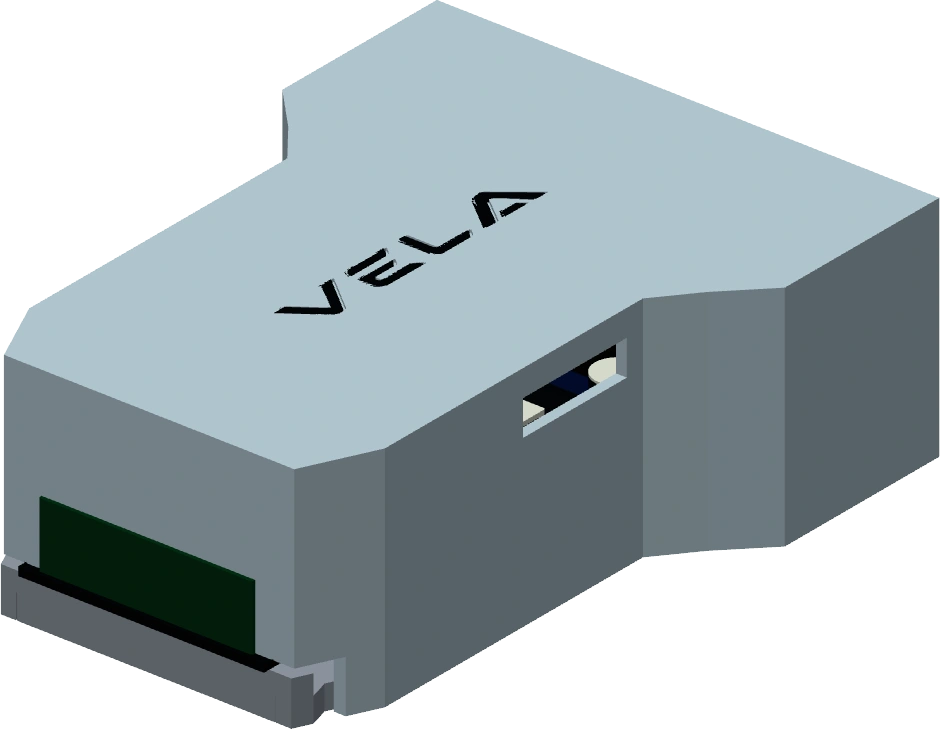
Inside VELAThe enclosure protects the acquisition electronics and leaves the connectors accessible.
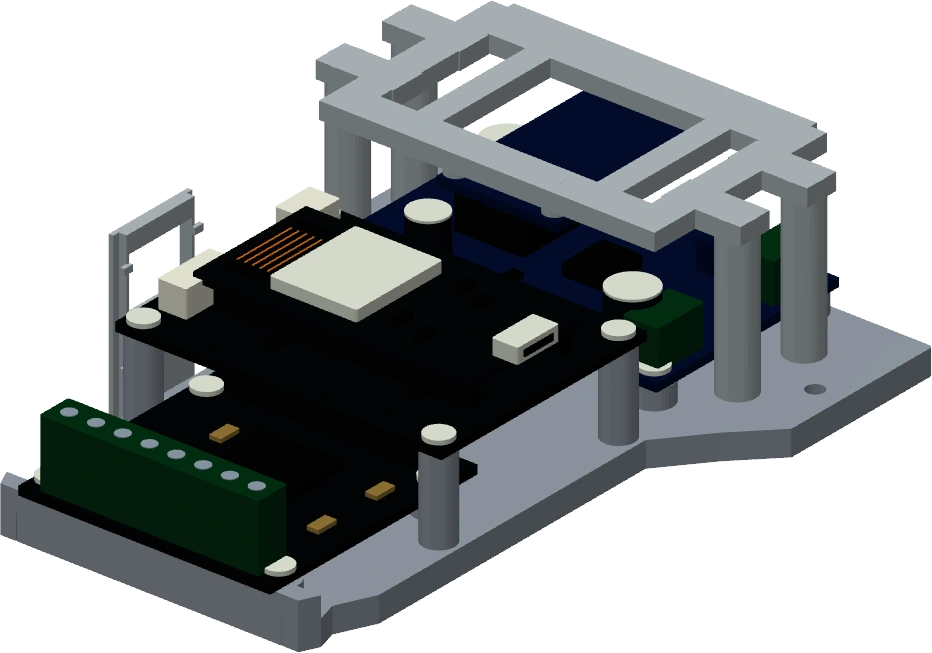
The acquisition board, controller, power and storage modules share a mechanical base.
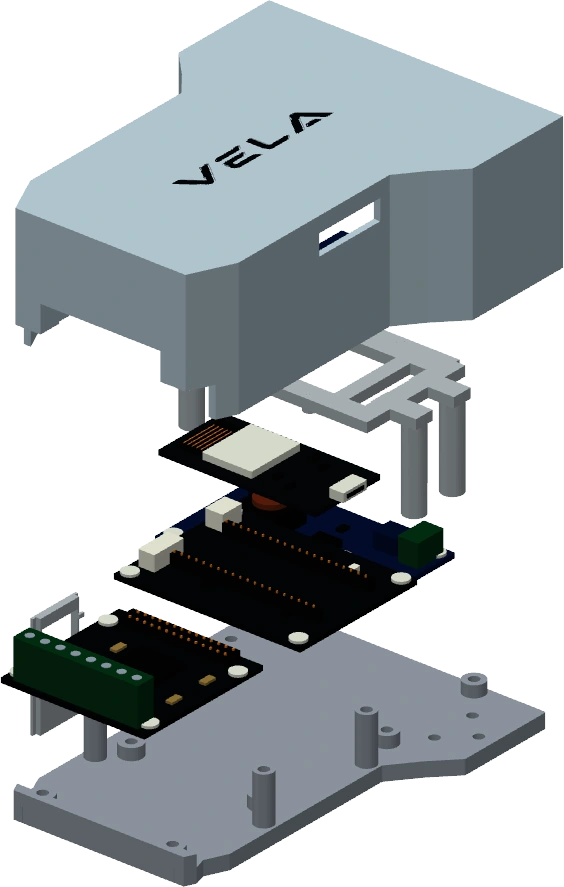
The enclosure, supports and electronics are separated to reveal the assembly relationships.
Three design principles guide the distributed architecture.
Pressure fluctuation and localized structural response offer complementary information.
The planned network wakes selected nodes for higher-resolution capture when a trend diverges.
Rank areas rather than reporting an unsupported exact leak coordinate.
Explore four monitoring states, compare regional responses and replay illustrative scenarios in the interactive console.
Illustrative interface simulation; separate from live bench measurements.
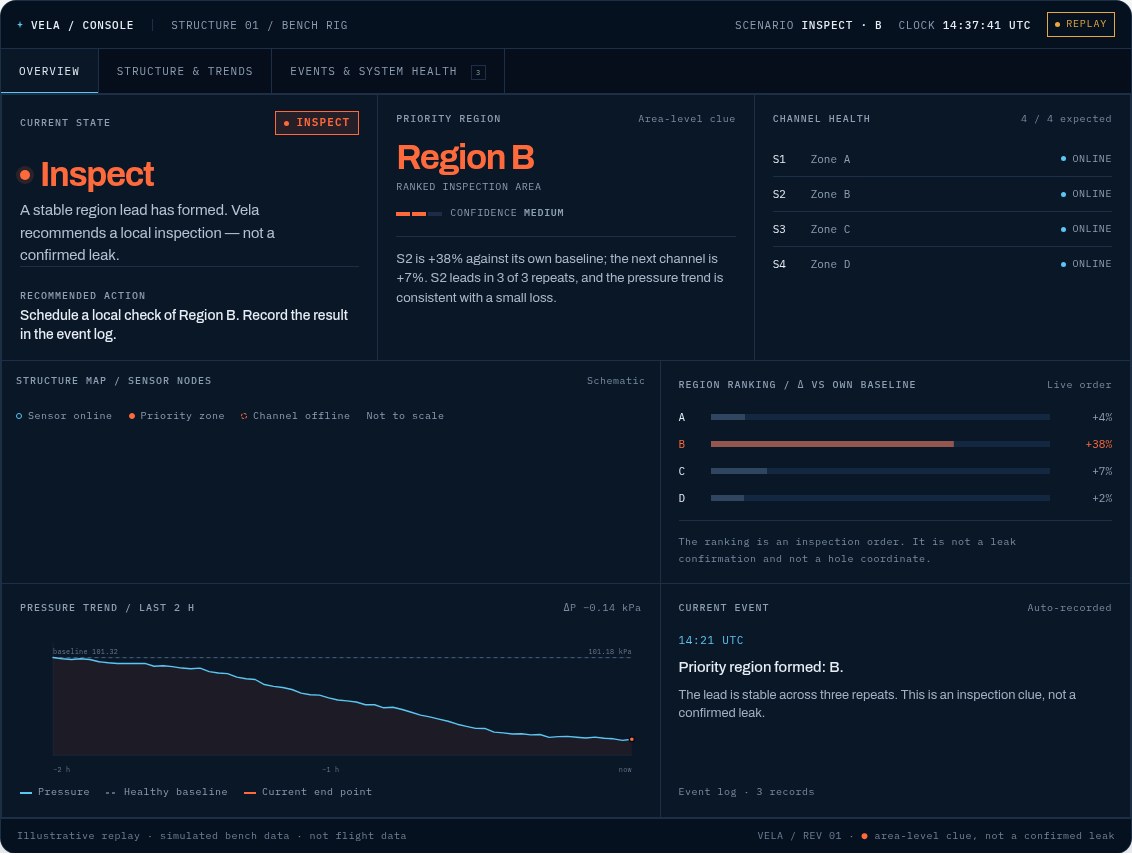
See the current state, suggested region and recommended action at a glance.
Review the sensor map, pressure trend and changes from each channel’s baseline.
Check channel availability, data completeness and the event history before acting.
Real hardware, a transparent chamber and two recorded PVDF channels form the foundation for the next validation stage.
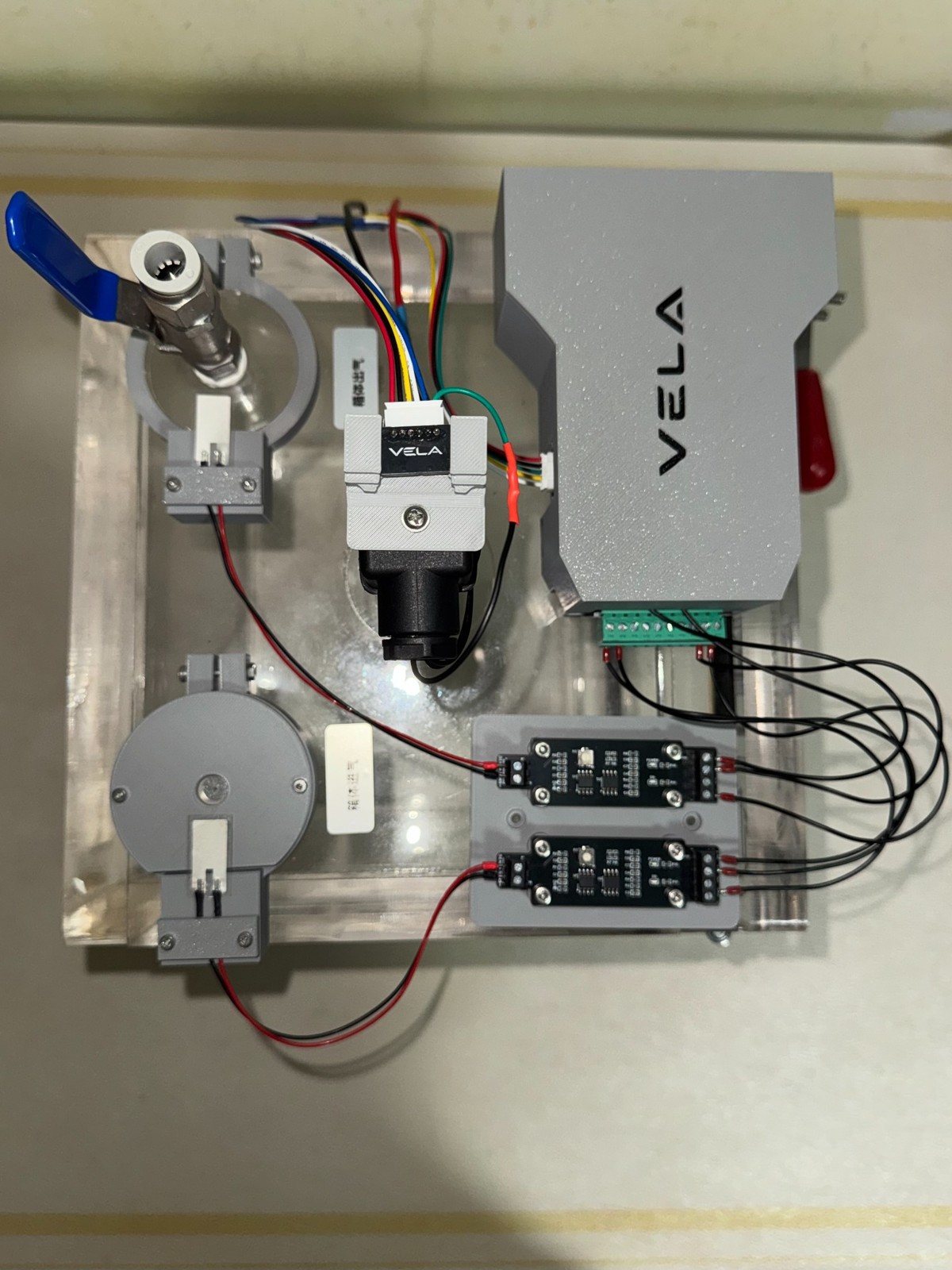
Pressure node, film sensors and acquisition hardware.
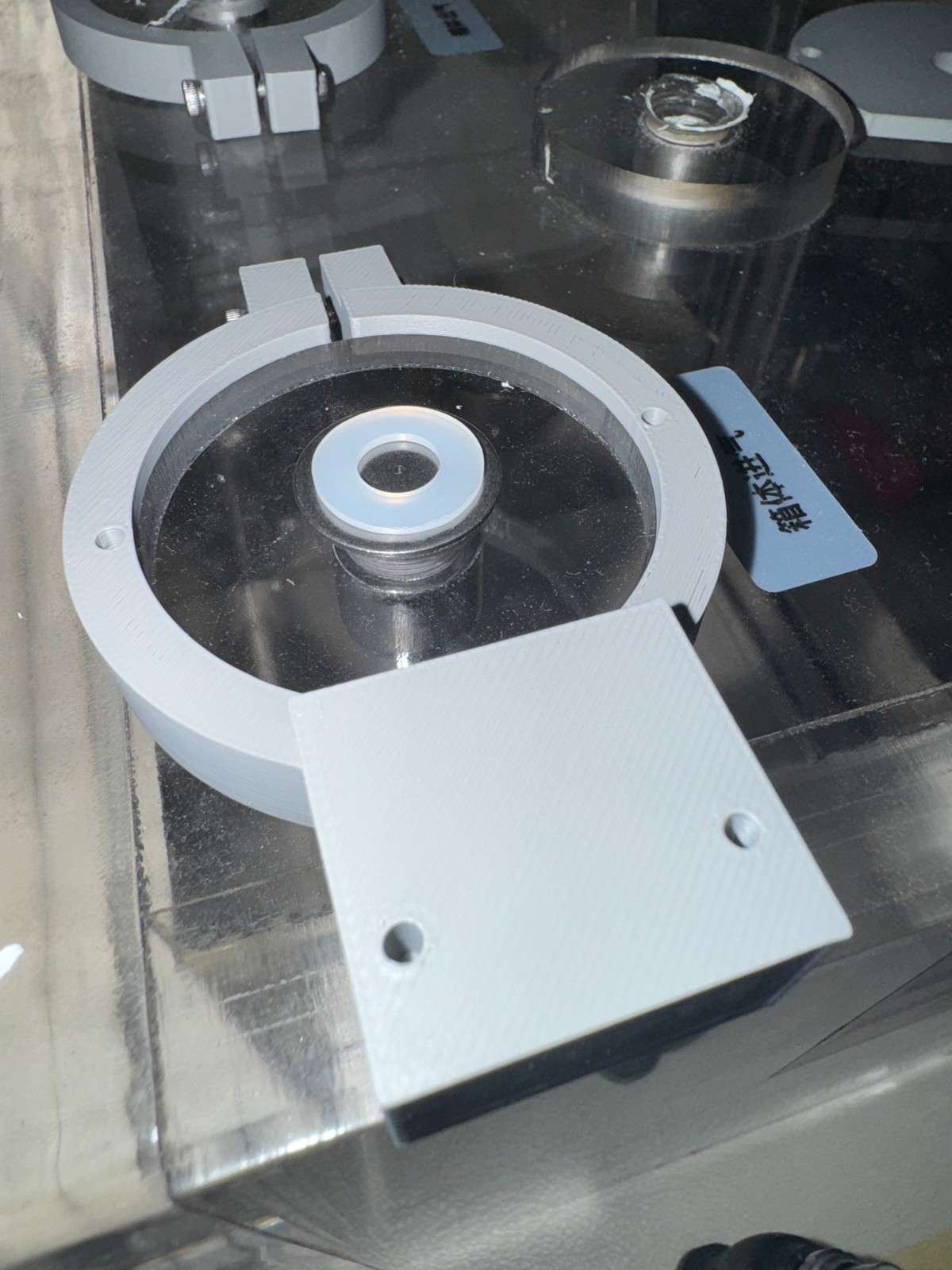
Replaceable leak-test fixtures on a chamber.
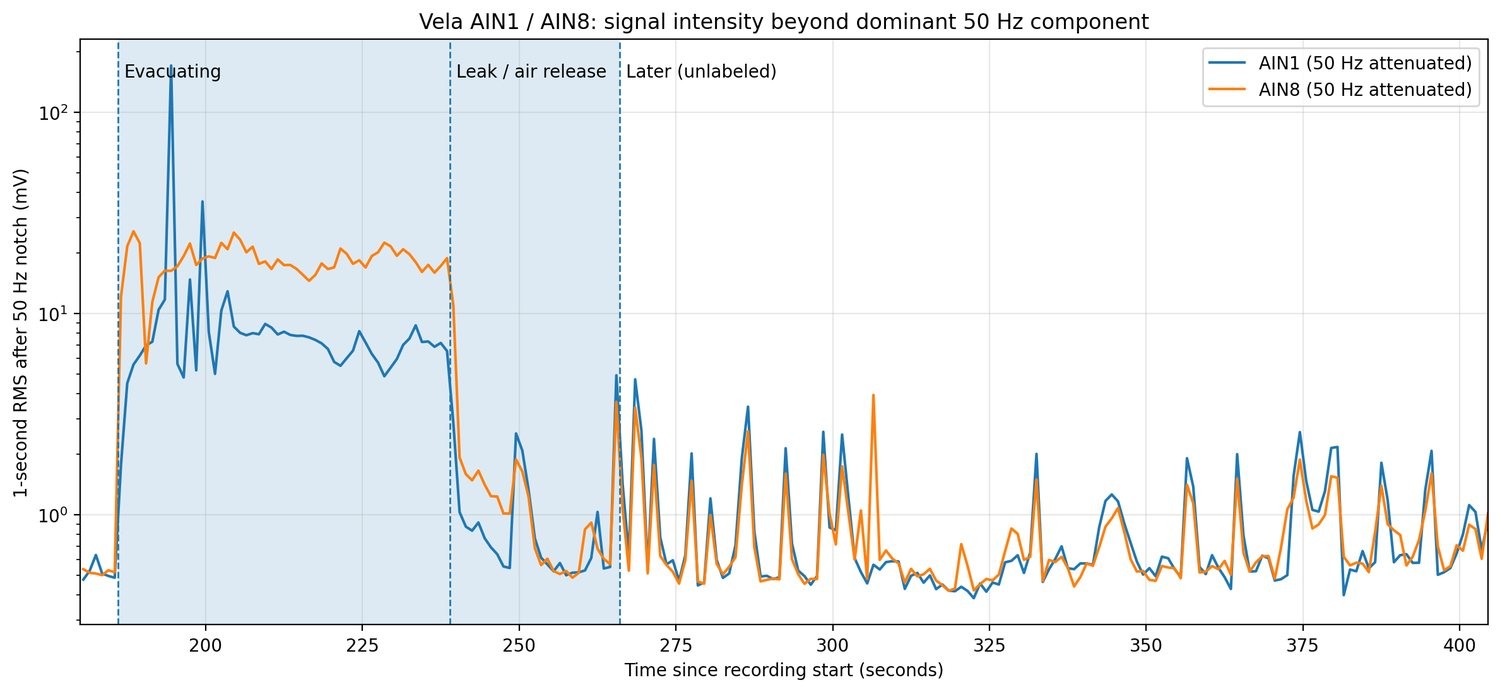
AIN1 and AIN8 responses across test stages.